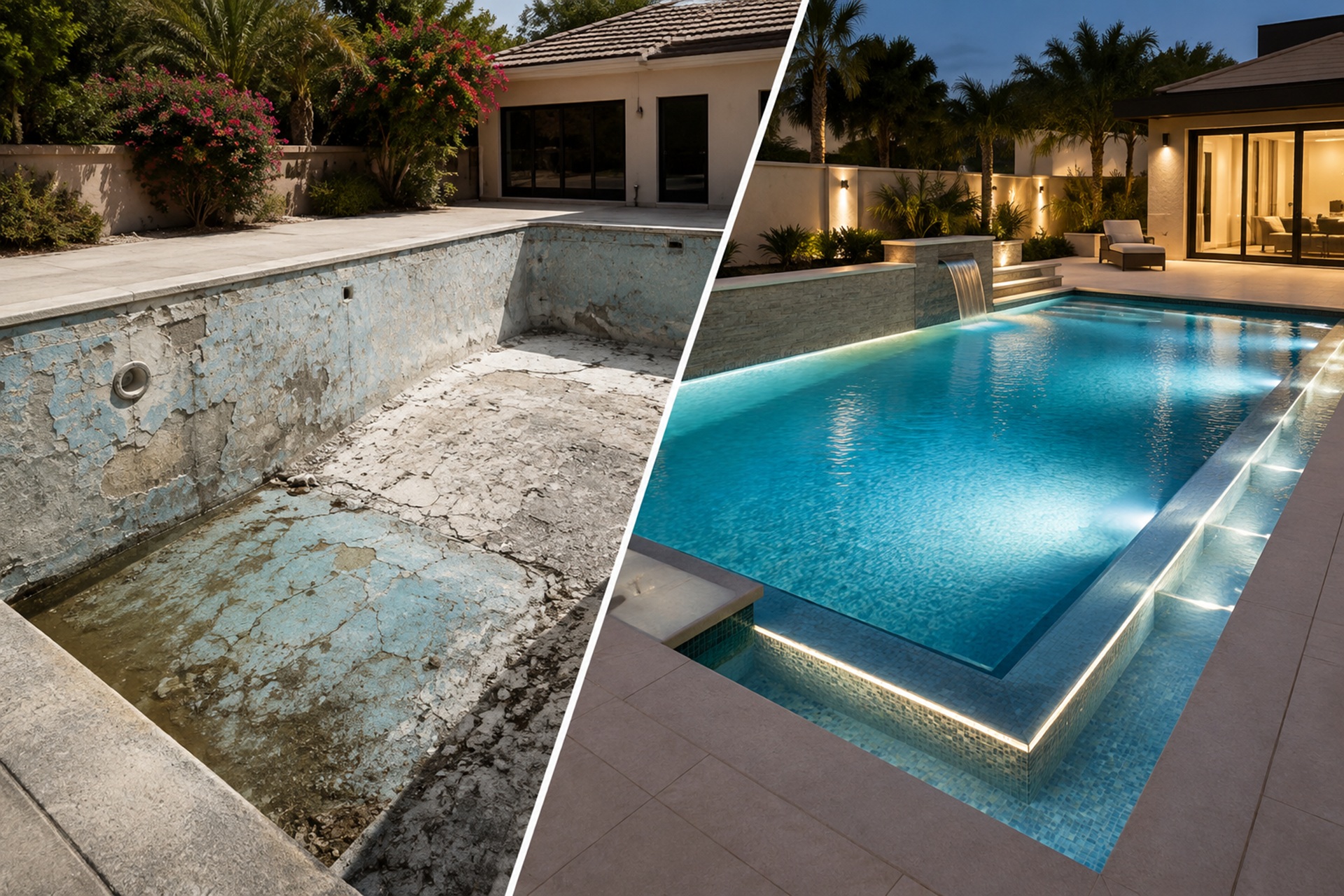
If you’re repeatedly repairing the same pool problems, you’re probably spending money on symptoms rather than fixing the underlying issue. An aging pool can reach a point where swimming pool renovation is more practical and cost-effective than another patch repair.
1. Pool Leaks Keep Coming Back
A small pool leakage may sometimes be caused by a damaged fitting or isolated crack. But if the water level keeps dropping after several repairs, there may be a larger waterproofing or structural problem.
Repeated leaks can indicate failed waterproofing, movement in the pool shell, damaged pipework or deteriorated joints. At this stage, simply sealing the visible leak may not solve the problem.
A proper inspection can determine whether the pool needs pool renovation rather than another temporary repair.
2. Your Tiles Are Cracked, Loose or Coming Off
Pool tiles do more than provide a finished appearance. Widespread cracking, hollow-sounding tiles, loose sections can indicate moisture penetration or movement beneath the surface.
Replacing a few damaged tiles is reasonable when the problem is isolated. If large areas are affected, removing the existing finish and inspecting the waterproofing and substrate may be the better approach.
This is particularly important when renovating an old swimming pool where several layers of previous repairs may already be present.
3. You Can See Structural Pool Cracks
Hairline surface cracks are not always a major concern, but large, widening or recurring cracks deserve professional attention.
Pool structural cracks can be associated with settlement, ground movement, structural stress or deterioration of the concrete shell. Simply filling the crack without identifying why it appeared can result in the same problem returning.
A structural pool renovation may involve structural assessment, crack treatment, waterproofing and replacement of damaged finishes.
4. The Filtration System Is Outdated
An old filtration system can affect water clarity, circulation and operating costs. Older pumps may also consume more electricity and struggle to provide the flow rate required by the current pool.
If you’re already opening up the pool area for renovation, it can make sense to assess the pump, filter, circulation lines, skimmers and other equipment at the same time.
Upgrading the equipment during renovation avoids paying for separate work later.
5. Your Pool Needs an Upgrade From Skimmer to Overflow
Older villa pools in Dubai are often based on traditional skimmer systems. While these can work well, some homeowners now prefer the cleaner appearance and improved surface circulation of an overflow pool.
An overflow pool upgrade can involve changes to the pool edge, balancing tank, drainage, circulation and filtration system. It is not simply a matter of replacing the coping.
If the property and structure are suitable, renovation can be an opportunity to modernise the entire pool rather than continuing with an outdated configuration.
6. Waterproofing Has Failed
Waterproofing failure is one of the more serious reasons to consider renovation. Signs can include persistent water loss, damp areas around the pool, damaged finishes or repeated leakage after repairs.
If the waterproofing layer itself has failed, repairing the visible finish may only delay the problem. A proper renovation may require removing sections of the existing finish, treating the substrate and installing an appropriate new pool waterproofing system.
7. The Pool No Longer Fits Your Family
Sometimes the pool itself is not failing; it simply no longer suits the property.
Your family may need a safer shallow section, better steps, a larger swimming area, improved lighting or a more practical surrounding deck. You may also want to update an outdated pool design to match a renovated villa.
This is where old pool renovation Dubai projects can make sense. Instead of maintaining a design that no longer works, the pool can be redesigned around how your family actually uses the outdoor space.
Why Ignoring These Signs Gets More Expensive
Repeated repairs add up quickly. More importantly, a leak can affect surrounding concrete, landscaping and other property elements if it continues unnoticed.
Structural deterioration can also become more difficult and expensive to address. Water loss increases operating costs, while damaged surfaces and outdated equipment can create additional maintenance and safety concerns.
A professional assessment helps establish whether you’re dealing with an isolated defect or a pool that needs wider work.
Renovation vs Repair: How Do You Decide?
Repair makes sense when the problem is isolated and the rest of the pool is structurally sound. A damaged fitting, single cracked tile or individual pump component usually doesn’t justify a complete renovation.
Renovation makes more sense when several problems occur together: recurring pool leakage, failed waterproofing, widespread tile damage, structural cracks, outdated equipment or a pool design that no longer meets your needs.
In that situation,renovating an old swimming pool as one planned project can be more sensible than paying for separate repairs year after year.
Get Your Pool Inspected Before Spending More on Repairs
KCJ Exterior Interior LLC, approaches pool renovation by looking at the condition of the structure, waterproofing, finishes, circulation and equipment before recommending the scope of work.
If your pool has recurring leaks, structural cracks, outdated equipment or widespread surface damage, don’t spend on another temporary fix without understanding the underlying problem.
Request a pool site inspection and renovation quote from KCJ Exterior Interior LLC. Get a pool renovation consultation